🐱 Cat Age Calculator — Human Years Converter
Find out how old your cat really is in human years using the AAFP's updated life stage formula — from kitten all the way to geriatric.
Cat Age Facts
How the AAFP Cat Age Formula Works
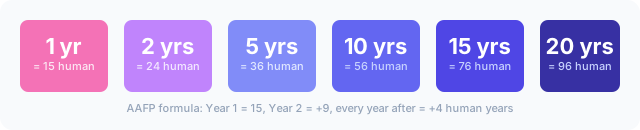
The American Association of Feline Practitioners (AAFP) overhauled cat life stage guidelines after decades of research revealed that feline aging is far more complex than any simple multiplier can capture.
The key insight is that cats age non-linearly. In their first year of life, cats undergo the most dramatic developmental changes of any period — equivalent to a human child going from birth to 15 years old. By the end of year two, they've added another 9 human years, reaching a human-equivalent age of 24.
From year three onward, the pace slows significantly. Each cat year adds approximately 4 human years in the Prime stage (years 3–6), then settling to 3 human years per cat year in the Mature, Senior, and Geriatric stages (years 7+). This non-linear model reflects the biological reality: the most rapid physical and neurological change happens early, while mid-to-late life proceeds more gradually.
This formula is used by veterinarians to guide health screening recommendations at each life stage. A "Mature" cat aged 7–10 (human equivalent 44–56) benefits from the same kind of preventive health tests a human in their 50s would receive — cholesterol, blood pressure, kidney function, and glucose screening.
Signs of Aging in Cats — by Life Stage
Cat Years vs Human Years — Full Comparison Table
Using the AAFP formula: Year 1 = 15, Year 2 = +9, Year 3 = +4, Years 4+ = +3 per year.
| Cat Age | Human Years | AAFP Life Stage | Vet Schedule |
|---|---|---|---|
| 6 months | 10 | Kitten | Monthly vet visits, vaccinations |
| 1 year | 15 | Junior | Annual check-up |
| 2 years | 24 | Junior | Annual check-up |
| 3 years | 28 | Prime | Annual check-up + dental |
| 4 years | 32 | Prime | Annual check-up |
| 5 years | 36 | Prime | Annual check-up |
| 6 years | 40 | Prime | Annual check-up + bloodwork |
| 7 years | 44 | Mature | Bi-annual check-up |
| 8 years | 48 | Mature | Bi-annual + bloodwork |
| 9 years | 52 | Mature | Bi-annual + bloodwork |
| 10 years | 56 | Mature | Bi-annual + full panel |
| 11 years | 60 | Senior | Bi-annual + full panel |
| 12 years | 64 | Senior | Bi-annual + full panel |
| 13 years | 68 | Senior | Bi-annual + full panel |
| 14 years | 72 | Senior | Bi-annual + full panel |
| 15 years | 76 | Geriatric | Quarterly check-ups |
| 16 years | 80 | Geriatric | Quarterly check-ups |
| 18 years | 88 | Geriatric | Quarterly check-ups |
| 20 years | 96 | Geriatric | Monthly monitoring |
Source: AAFP Feline Life Stage Guidelines (updated). Vet schedule recommendations are general guidelines — follow your vet's specific advice.
Frequently Asked Questions
How to Care for Your Cat at Every Life Stage
Knowing your cat's true age in human years helps you understand what kind of care they need right now — not generic advice, but stage-specific guidance that matches where your cat is in their life journey.
Kitten (0–6 months) — Rapid Development
The kitten phase is the most intensive period of development. Kittens need frequent small meals (3–4 times daily) of high-calorie kitten food to fuel their rapid growth. The critical socialisation window is 2–7 weeks — exposure to people, sounds, and other pets during this period shapes their adult temperament permanently. Vaccinations, parasite prevention, and spay/neuter discussions are all key milestones before 6 months.
Junior & Prime (1–6 years) — Peak Condition
These are generally the easiest years healthwise. Maintain your cat at a healthy weight — obesity affects roughly 60% of domestic cats and significantly shortens lifespan. Provide environmental enrichment: puzzle feeders, climbing structures, and regular interactive play stimulate natural hunting behaviour and prevent stress-related behavioural problems. Annual dental check-ups are important from age 3; dental disease is the most common feline health issue and is linked to heart and kidney damage.
Mature (7–10 years) — Proactive Monitoring
The mature stage is when proactive veterinary care pays its biggest dividends. Chronic kidney disease (CKD) affects 31% of cats over 12, but damage begins accumulating silently years earlier. Annual bloodwork from age 7 can catch early kidney changes when dietary intervention can meaningfully slow progression. Hyperthyroidism, diabetes, and hypertension are also increasingly common in mature cats — all diagnosed with routine screening.
Senior & Geriatric (11+ years) — Comfort and Quality of Life
Senior cats benefit enormously from small environmental modifications: low-sided litter trays (arthritis makes high sides painful), warm resting spots (older cats thermoregulate poorly), and food placed at a comfortable height. Wet food is preferable as cats' thirst drive decreases with age, making hydration critical for kidney health. Cognitive dysfunction syndrome is common — predictable routine, gentle interaction, and veterinary-prescribed supplements or medications can help maintain mental clarity.
Why Indoor Cats Live So Much Longer
The lifespan difference between indoor and outdoor cats is dramatic — roughly 12–18 years versus 5–7 years. The risks outdoor cats face include road traffic accidents (the leading cause of outdoor cat death), attacks from dogs and other wildlife, infectious diseases like FIV and FeLV spread through cat-to-cat contact, ingestion of rodenticide and other toxins, and exposure to extreme weather. Keeping cats indoors — with adequate enrichment, climbing space, and interactive play to compensate for the reduced stimulation — is one of the most impactful decisions a cat owner can make for longevity.