🥩 Protein Calculator — Daily Protein Intake for Your Goal
Find your ideal daily protein target based on your weight, activity level, and goal — with meal-by-meal breakdown.
Protein Quick Facts
Sources: WHO, Morton et al. 2018, Stokes et al. 2018
How Much Protein Do You Actually Need? The Research
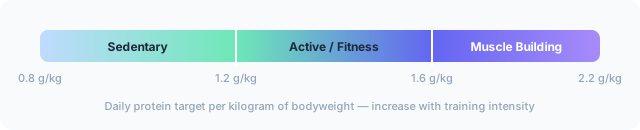
Protein recommendations vary widely — from the bare-minimum WHO figure of 0.8g/kg to the upper athlete range of 2.4g/kg. The difference matters enormously: a 80kg person following the minimum gets 64g/day, while an athlete may target 192g/day.
The key variable is your goal. For muscle gain, a landmark 2018 meta-analysis by Morton et al. covering 49 studies found the threshold for additional benefit sits at 1.62g/kg/day. Beyond that point, extra protein didn't produce more muscle. During fat loss, however, going higher (2.0–2.4g/kg) helps preserve muscle despite the calorie deficit.
If you know your body fat percentage, the calculator bases intake on lean mass — a more accurate method since fat tissue doesn't require protein for maintenance.
Protein targets by goal (per kg body weight)
High-Protein Foods: Grams per 100g
The most protein-dense foods to help you hit your daily target.
Frequently Asked Questions
Protein Calculator for Muscle Gain — How Much Is Enough?
When building muscle, the sweet spot for protein is 1.6–2.2g per kg of body weight per day. Research by Morton et al. (2018) found that above 1.62g/kg, additional protein provides diminishing returns for muscle gain in most people. However, during a calorie surplus (bulking), staying toward the upper end (2.0–2.2g/kg) ensures amino acids are never the limiting factor for muscle protein synthesis — even if training volume is high.
Distribute protein evenly across 3–5 meals. Each meal should contain at least 2–3g of leucine — the key branched-chain amino acid that triggers muscle protein synthesis. Practical targets: 30–50g of protein per meal for most adults.
Protein Intake for Weight Loss — Does High Protein Help?
During a calorie deficit, protein becomes more critical, not less. When calories are restricted, the body increases the rate at which it breaks down muscle for energy. Eating 1.8–2.4g/kg of protein during fat loss preserves lean muscle mass, keeping your metabolism from slowing as much as it otherwise would. High-protein diets also significantly reduce hunger — protein suppresses ghrelin (the hunger hormone) more than carbohydrates or fat, making a calorie deficit easier to sustain.
Protein Calculator for Women — Are Requirements Different?
Women's protein requirements per kilogram of lean body mass are essentially the same as men's. The total gram target is lower simply because women typically have less muscle mass and lower body weight. For women focused on body composition, 1.6–2.0g/kg supports both muscle maintenance and fat loss. Women during pregnancy need an additional 25g/day (roughly 1.1g/kg total). Breastfeeding adds another 20g/day above baseline. These increases support fetal development and milk production without compromising maternal muscle mass.
Protein Calculator: What the Science Actually Says
Protein recommendations have been revised upward repeatedly over the past two decades as research techniques have improved. The longstanding 0.8g/kg guideline was set to prevent deficiency in sedentary populations — not to optimise muscle retention, recovery, or body composition in active people.
The Leucine Threshold
Each meal needs to clear the leucine threshold — approximately 2–3g of leucine — to trigger muscle protein synthesis. Below that threshold, the anabolic signal is weak even if total daily protein is adequate. This is why protein quality and meal distribution matter alongside total intake. Whey protein, eggs, and chicken breast all clear the leucine threshold in a 30g serving; plant sources may require larger portions or combination.
Why Protein Timing Matters Less Than You Think
The "anabolic window" — the idea that you must consume protein within 30 minutes of training — has been largely debunked. Total daily protein is far more important than precise timing. That said, consuming protein within 2 hours post-workout is still a sensible practice, particularly in a fasted state.
Note: This tool provides general nutrition guidance. Individual protein needs can vary based on medical conditions, age, and health status. Consult a registered dietitian or physician before making significant dietary changes, especially if you have kidney disease, liver conditions, or other chronic health issues.