💤 Nap Calculator — Best Nap Length & Wake-Up Time
Find the best nap length and exact wake-up time to restore your energy without waking up groggy.
Nap Science at a Glance
Which Nap Length Is Right for You?
Not all naps are equal. The wrong duration leaves you feeling worse than no nap at all.
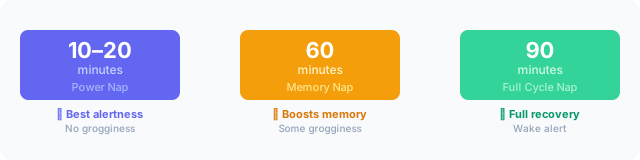
Stays in Stage 1 and early Stage 2 light sleep. No grogginess on waking — alertness and concentration restored within minutes. Ideal for office workers, students, drivers on long journeys.
- → Lunch break boost
- → Pre-exam focus
- → Long drive recovery
- → Post-workout refresh
You will likely enter Stage 3 deep sleep but not complete a full cycle. Waking mid-deep-sleep causes significant sleep inertia — worse grogginess than no nap at all. This is the dead zone.
- → Causes grogginess
- → Disrupts night sleep
- → Reduces motivation
- → Performance drops
Completes one full sleep cycle including deep NREM and REM sleep. You wake at the natural end of the cycle — alert and refreshed. Includes creative REM sleep that boosts problem-solving and memory.
- → Shift workers
- → Heavy physical training
- → Sleep debt recovery
- → Creative work boost
The Science of Napping: What Studies Actually Show
A landmark 1995 NASA study of long-haul military pilots found that a 26-minute nap improved cognitive performance by 34% and alertness by 54% versus a no-nap control. This study directly led to NASA's formal nap policy for astronauts and long-haul flight crews.
A 2008 University of California study compared a 90-minute nap to rote learning and found the nap group significantly outperformed on a memory test 6 hours later — with nap participants who achieved REM sleep performing best of all. REM sleep's role in memory consolidation and creative problem-solving is now well-established.
A 2021 study in General Psychiatry found that regular nappers (1–2 times per week) had significantly better cognitive function, larger brain volume in multiple regions, and higher scores on processing speed and visuospatial ability than non-nappers — controlling for age, health, and sleep duration.
Napping Across Cultures
Frequently Asked Questions
Best Nap Time for Night Shift Workers
Night shift workers benefit most from a "split sleep" strategy: a primary sleep period of 5–6 hours after the shift ends, followed by a 20–30 minute power nap 1–2 hours before the next shift. This pre-shift nap significantly improves alertness during the first half of a night shift without interfering with the main sleep period. Avoid napping longer than 30 minutes before a shift — you risk entering deep sleep and waking groggy.
How Long Should a Nap Be for Adults?
For most adults, the ideal nap is either 10–20 minutes (power nap — light sleep only, no grogginess) or exactly 90 minutes (one full cycle — includes REM, restores creativity and memory). The 30–60 minute range is the worst choice: long enough to enter deep slow-wave sleep, but not long enough to complete a cycle. You wake mid-cycle feeling worse than before the nap. If you cannot spare 90 minutes, always choose under 25 minutes.
Is Napping Good or Bad for Nighttime Sleep?
Napping is not bad for nighttime sleep when timed correctly. The critical rule: finish all naps by 3:00 pm. Napping after 3:00 pm reduces sleep pressure (adenosine build-up) enough to delay sleep onset by 1–2 hours and reduce deep sleep in the following night. Morning naps (before noon) have the least impact on nighttime sleep and highest REM content, making them ideal for creative recovery and memory consolidation.