🥗 Macro Calculator — Daily Protein, Carbs & Fat for Your Goal
Get your personalised macronutrient targets — protein, carbohydrates, and fat in grams — based on your body stats and fitness goal.
Custom macro split (must total 100%)
Quick Macro Facts
Sources: USDA Dietary Guidelines, ISSN Position Stand
How Macros Work: Protein, Carbs, and Fat Explained
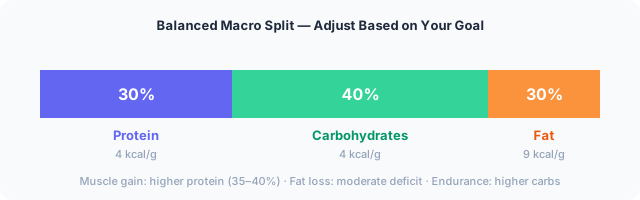
The three macronutrients provide all of your dietary calories. Each plays distinct and irreplaceable roles:
Protein builds and repairs muscle tissue, produces enzymes and hormones, and is the most satiating macronutrient. At 4 cal/g, it is equally calorie-dense to carbohydrates, but its thermic effect (25–30% of its calories are burned in digestion) makes it the most metabolically "expensive" food.
Carbohydrates are the body's preferred fuel, especially for high-intensity exercise. They are stored as glycogen in muscles and the liver. At 4 cal/g, they are calorie-efficient and essential for performance.
Fat is calorie-dense at 9 cal/g and is essential for hormone production, fat-soluble vitamin absorption, and brain function. Dietary fat does not directly cause body fat gain — excess calories from any source do.
Macro splits by goal
Macronutrient Calorie Conversions Reference
Use this table to convert between grams and calories for each macronutrient.
| Macronutrient | Calories per gram | 50g = | 100g = | Primary role |
|---|---|---|---|---|
| Protein | 4 cal/g | 200 cal | 400 cal | Muscle repair, enzyme production, satiety |
| Carbohydrate | 4 cal/g | 200 cal | 400 cal | Fuel for brain and muscles, glycogen storage |
| Fat | 9 cal/g | 450 cal | 900 cal | Hormones, vitamin absorption, cell membranes |
| Alcohol | 7 cal/g | 350 cal | 700 cal | No nutritional role; metabolised as priority fuel |
Frequently Asked Questions
Macro Calculator for Weight Loss — High Protein vs Low Carb
The great macronutrient debate for weight loss — high protein vs. low carb vs. low fat — has been studied extensively. A landmark 2020 DIETFITS trial compared low-fat and low-carb diets in 609 adults over 12 months and found no significant difference in weight loss between the groups. The consistent finding across the literature is that protein intake is the macro that most reliably improves body composition outcomes. Diets higher in protein produce greater fat loss and better muscle retention at equivalent calorie deficits, regardless of carbohydrate or fat content.
For practical weight loss, aim for at least 30–35% of calories from protein (or 1.6 g per kg bodyweight), and then distribute carbohydrates and fat based on personal preference and dietary tolerability. The macro split you can stick to consistently produces better results than the theoretically optimal split you abandon after two weeks.
Macro Calculator for Muscle Gain — Bulking Macros Explained
Building muscle requires both an adequate calorie surplus and sufficient macronutrient distribution. A "dirty bulk" — eating in a large surplus of 500–1,000+ calories per day — is a common approach that produces rapid scale weight gain, but research shows the majority of that gain is fat, not muscle. A lean bulk of 200–400 calories above TDEE, with 30–35% protein, 45–50% carbohydrates, and 20–25% fat, maximises the ratio of muscle to fat gained.
Carbohydrates deserve particular attention during a muscle-building phase. Glycogen-loaded muscles perform better in resistance training, and the post-workout insulin spike from carbohydrate intake enhances amino acid uptake into muscle cells. Protein timing also matters more when bulking: distributing protein intake across 4–5 meals of 30–40 g each (rather than 2 large meals) optimises muscle protein synthesis over the day.
Keto Macros Calculator — 70/25/5 Split Explained
A ketogenic diet maintains carbohydrates below 20–50 g per day — typically 5% of total calories — while providing 70–75% of calories from fat and 20–25% from protein. At this carbohydrate intake, liver glycogen depletes within 2–4 days, and the liver begins converting fatty acids to ketone bodies (beta-hydroxybutyrate, acetoacetate, and acetone) as an alternative fuel. This state is called nutritional ketosis.
Protein is deliberately kept moderate on keto because excess amino acids can be converted to glucose via gluconeogenesis, potentially disrupting ketosis. This distinguishes keto from high-protein diets, where protein intake of 2+ g per kg is common. For athletes on keto, performance in high-intensity activities typically suffers due to the lack of readily available glycogen — keto tends to suit lower-intensity activities like steady-state cardio and endurance events better than explosive or strength sports.
Macro Calculator: How to Use Your Results
Your macro targets from this calculator are starting points — not rigid daily quotas. Body weight fluctuates daily by 1–2 kg due to water, food volume, and glycogen, so the scale is not a reliable short-term feedback tool. Assess macro adherence over weekly averages and adjust targets based on real-world results over 3–4 weeks rather than daily data.
Protein: The Most Important Macro to Track
If tracking all three macros feels overwhelming, start with protein alone. Research by Layne Norton and others consistently shows that adequate protein intake is the macro most strongly associated with favourable body composition outcomes — more than total calorie deficit size, carbohydrate content, or eating frequency. Hit your protein target daily, keep total calories roughly aligned with your goal, and let the fat and carbohydrate distribution find its natural balance.
Reassess Every 4–6 Weeks
As your body weight changes, your TDEE and macro targets should be recalculated. A 5 kg reduction in body weight reduces maintenance calories by approximately 100–150 per day — meaning the same deficit that produced results at the start will produce less over time. Recalculate every 4–6 weeks, or whenever weight loss has stalled for more than three weeks despite consistent tracking.
Disclaimer: This macro calculator is for general informational purposes only. Nutritional needs vary by individual, medical history, and specific goals. Consult a registered dietitian or sports nutritionist for personalised advice, particularly if you have metabolic conditions, kidney disease, or a history of disordered eating.